
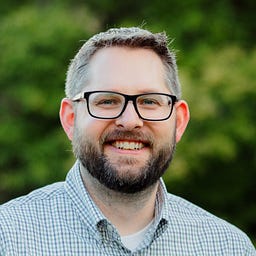
Peter Crosby
July 12, 2026 · Newsletter
Faith and Politics
Today, in 2026, I find myself in a position I would not have expected as a young man: not only a Congressional candidate, but a Congressional candidate with the Democratic party. Most active members of the LDS Church (The Church of Jesus Christ of Latter-Day Saints) don’t traditionally formally associate with the modern Democratic party, especially not in Utah where I live. Getting to this point has been an unexpected, and yet an almost inevitable, journey.
Growing up LDS, in a military family, meant I was raised with what most people would call traditional values: faith in God, service to your fellow man and country, and an emphasis on integrity, honesty, and charity as the core virtues to strive for and emulate. As I grew up, this was layered over with my experiences in the Boy Scouts: I was to be trustworthy, loyal, helpful, friendly, courteous, kind, obedient, cheerful, thrifty, brave, clean, and reverent. I spent four teenage summers after earning my Eagle Scout working at a Boy Scout camp in the mountains, trying to pass on these values to others. I believed them, and I tried to live them.
Thanks for reading! Subscribe for free to receive new posts and support my work.
When I turned nineteen, I decided to serve a mission. For my faith, that meant two years in a place I did not choose, teaching and serving people I did not know. I was sent to the South, serving most of my time in lower Alabama, where I saw firsthand the impacts of poverty and racial discrimination on people who just wanted to live something approaching a good life. I happened to be down there during a particularly active hurricane season, which included Hurricane Katrina.
I remember coming out in the eye of the storm to watch the waves crash over the Mobile Bay bridge and thinking “Huh, haven’t seen that before.” After the storm had passed, the local communities in Mobile and Daphne were devastated. Biloxi, right across the border, was half wiped out, with homes washed clean off their foundations. People needed help, and with a moral clarity that really only seems to exist in a time of crisis, I knew I was in the right place at the right time to do what needed to be done: take care of people who needed it.
This was always the part of my religion and faith that I felt the most comfortable in, the part where we could roll up our sleeves and do what our Exemplar would do: ease suffering, provide tangible relief, offer food and shelter, help our neighbors clean up and rebuild their lives. I got to see with my own eyes what happens when systems break, and the unnecessary hardship those failures cause. If you are old enough, you might remember watching the videos of New Orleans where thousands were packed into a stadium without enough food, water, or relief from the heat, while others were left stranded in their homes as empty schools buses sat unused and flooded. Mobile was not as bad, but it took time before government resources could reach us, and there was a lot of harm that could have been prevented with better planning, better resourcing, more concern for the lives of ordinary people. This was fertile ground for my own personal ideals to find root, nourished by tangible actions that showed me that even when systems break, regular people can fix them, if they will get to work, together.
Upon coming home from my mission, I did not concern myself with politics at all. I got married to my best friend, started a life, and worried about all of the concerns a new husband, and then new father, has to keep them occupied. I voted for both Republicans and Democrats at the federal level, mostly Republican at the state level, and avoided registering with either political party. In my mind, the party system was a bit of a mess (an opinion which has only strengthened with time), and I could cast my vote without getting more deeply enmeshed. That changed in 2016.
Donald Tump has become the black hole of our modern political system, and all things seem to both orbit him and get sucked into him, whether they want to or not. He has transformed the national Republican party into the Trumplican party, and so strongly imposed his will and personality, there is no Republican member of Congress who can defy him and still have a political career (as Rep. Massie and Sen. Cornyn have discovered). He rules supreme.
I did not know any of this would happen when he first announced his run, but I did know what I thought about him as a person: he was unfit to be the President of the United States of America, with a temperament ill-suited for the responsibility and a serious lack of moral character that I found worrisome. For the first time, I registered with a political party and attended a neighborhood caucus. I was thirty-one years old, and a Republican. My precinct sent me to the state convention as a state delegate, and I cast my vote for someone not Donald Trump (It was John Kasich, who I felt was the most reasonable of the Republican candidates that year). While Trump did not secure Utah’s Republican primary votes, he won enough to become the nominee, and won the general election. Ultimately, I voted for Evan McMullin, perhaps naively hopeful we would see a third party secure electoral college votes. I unregistered myself as a Republican shortly after.
For the last ten years, I have watched a political system fray at the edges until now the core values of our republic are under direct threat. I have seen one political party abandon its values to serve greed, corruption, and special interests. The national Republican party has forgotten honor, and duty, and integrity, and there appears to be no charity there for regular people. I do not hold national Democrats blameless in this either. Too often their message and focus appears to be on issues that do not address the concerns of people who are not part of their own elite, and their resistance more often than not takes the form of a strongly worded letter. I am the first to recognize words have power, but we need to roll up our sleeves, not just wet the nibs of our pens.
This brings me to last year, when I announced my candidacy. I was unaffiliated, though I had attended the local Democratic party state convention. There I met local Democrats, and I was impressed to see people who genuinely cared about solving problems in their communities. Most of them up here in Northern Utah seemed less concerned with ideology than with finding solutions that helped regular people. They were deeply enmeshed in their communities, they knew the people they wanted to help, and they were focused on active service. I looked at them and thought, “I can be that kind of Democrat.” I registered as a Democrat, then filed my candidacy for Congress (that is a whole different story).
Faith is an interesting thing. The Apostle Paul declared “it is the substance of things hoped for, the evidence of things not seen.” Alma added on the important caveat those things must be true, and Moroni provided further clarification that we receive no witness until after our faith is tried. Finally, James, the bother of Christ, points out that faith without works is dead, being alone.
My faith has always been rooted in the two great commandments: that I am to love God, and I am to love my fellow man. I show love to God by loving my neighbor, and loving my neighbor means serving them. I take this obligation seriously, and this more than anything else, is why I am a Democrat today.
While I still don’t love the two-party system our country has, I can acknowledge it is the process we currently have in place. As I look at the two parties, I see stark differences in the focus of each. On one hand, there is a party beholden to an individual who seems to only be concerned with his own wealth and his own power. He refused to sign legislation that would help ease a housing crisis, has stated he does not care about affordability, loves inflation, and does not think about American’s financial situations. His party passes legislation that strips health care coverage from millions of Americans, and now wants to gut Social Security, all while cutting taxes for corporations and the ultrawealthy. None of that looks like serving my neighbor.
On the other hand, I have a party where I don’t agree with all of the policy positions, but I see a general concern for the health and well-being of our families and communities. Democrats are trying to provide broad health care access, trying to ease the financial burden on regular families, and are focused on programs that provide education and housing access. Perhaps most importantly, especially here at the local level, I see a Democratic Party that is fighting to protect the sanctity of our Constitution and the rights of all Americans.
This, then, is the inevitability of my decision: if I am to remain true to the values I was raised with (integrity, honesty, charity in the service of our neighbors and our nation), if I am to be true to the faith which my parents have cherished, one which instructs me to love my neighbors and serve them, my political activity must reflect who I am. I am a Democrat not in spite of my faith, but because of it.
I am running as a Democrat to fix what has been broken, because I know ordinary people can fix it if we will work together. Our Republican representative either can’t or won’t help us, largely because his party isn’t really the Republican party anymore. Hopefully one day it will be again, but until that happens, the rest of us will get together, roll up our sleeves, and get to work.
Thanks for reading! Subscribe for free to receive new posts and support my work.